)
)
)
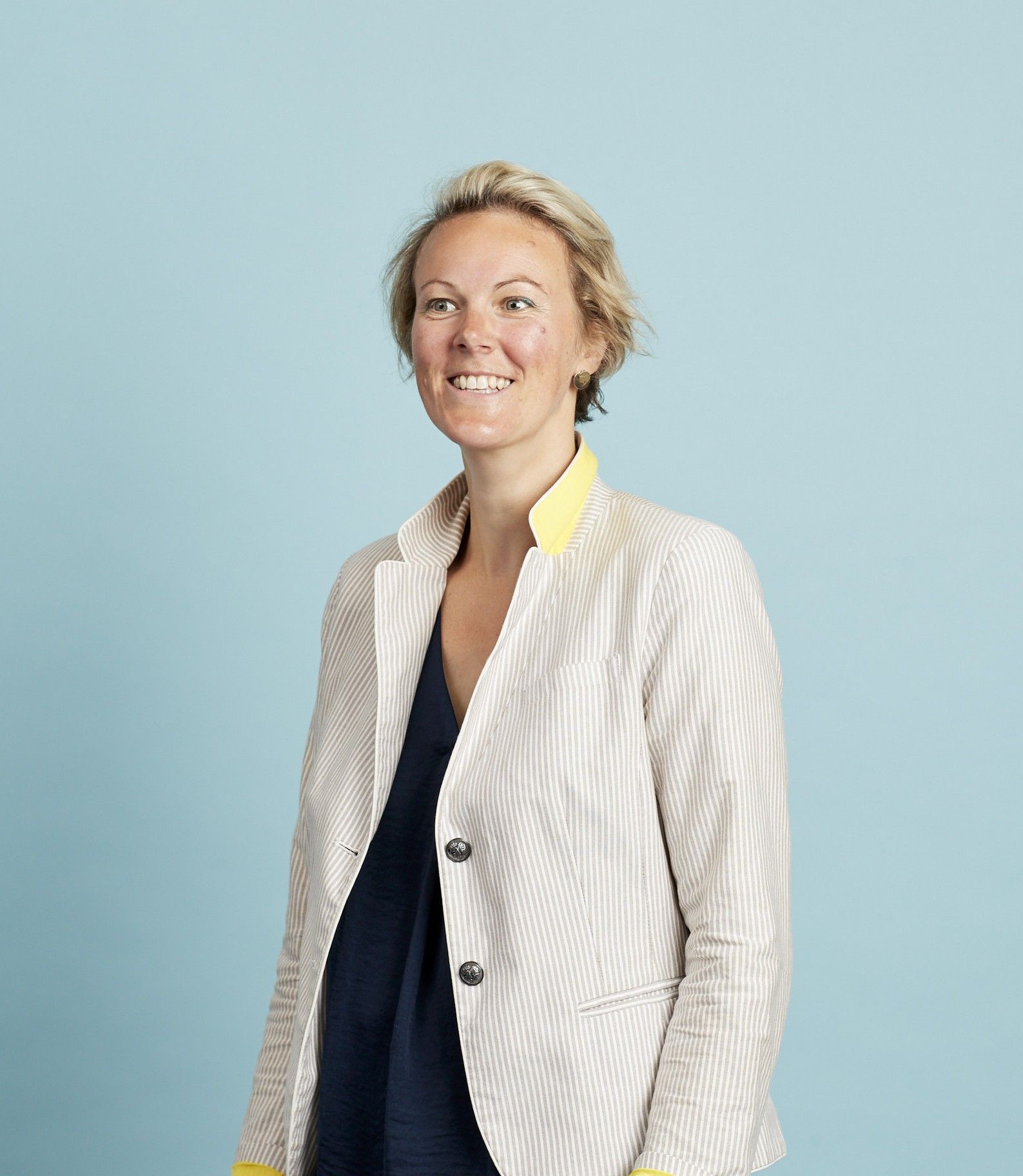
Q&A with Nicola Osborn, Creative Director at Basha Franklin
What were the key considerations in redesigning 25 Hanover Square to enhance its relationship with the surrounding environment?
A central consideration in redesigning 25 Hanover Square was strengthening its dialogue with the historic Mayfair context while delivering a next-generation, future-proof building. From the outset, retaining and respecting the square’s heritage was key, while also meeting the owner’s brief to challenge traditional perceptions of Mayfair offices and establish contemporary longevity. Much of the existing structure was preserved and reinterpreted, creating a façade and streetscape that are both respectful of their surroundings and unmistakably modern.
Our interdisciplinary, tailored approach ensured the building could be revitalised with long-term flexibility, premium value and future adaptability. The façade was carefully realigned and articulated in an architectural language that respects its historic setting while signalling a contemporary, forward-looking identity. Material choices include limestone and pre-patinated Corten steel, references traditional vernacular yet convey timeless modernity.
Enhancing the building’s connection to the public realm was equally critical. Enlarged ground-floor windows and ultra-clear, anti-reflective glazing from Guardian Glass maximise natural light, visual permeability and engagement with Sir George Street and the square, creating a more inviting and interactive environment.
Inside, the strategy continues with human-centred, contextually informed interventions. Spatial planning, materiality, daylighting and circulation are designed to support wellbeing, creativity, collaboration and sustainability, ensuring the building not only complements its historic setting but also sets a new benchmark for contemporary, premium Mayfair workplaces.
How does Basha-Franklin incorporate neurodiversity considerations into your design process to create inclusive environments?
At Basha-Franklin, designing for neurodiversity is integral to our process. We create environments that support comfort, autonomy and authentic expression, recognising that people experience space in profoundly different ways. Our human-centred approach goes beyond compliance or functionality, focusing instead on how environments feel, perform and adapt over time. We partner with clients who understand that inclusive design is not only ethical, but a powerful driver of wellbeing, productivity and long-term value.
A central pillar of this approach is sensory design. We carefully choreograph colour, light, materiality, sound and air quality to create a spectrum of atmospheres, from calm and restorative to energising and social. Allowing individuals to move intuitively between spaces that best support their mood, focus and working style.
At MYO St Paul’s, the building’s deep floor plates and limited natural light penetration required colour, texture and finish to play a far more active architectural role. Colour was therefore deployed not as decoration, but as a spatial and cognitive tool, compensating for reduced daylight, supporting neuro-inclusivity, and guiding how people feel and move through the building. Each floor is organised around a distinct palette representing Earth, Nature and Sky which creates atmospheres that are emotionally legible and intuitively navigable. These palettes form a subtle wayfinding system embedded within the fabric of the building, helping users orient themselves while supporting focus, calm and sensory balance.
Lighting is another critical layer. Many neurodivergent individuals are particularly sensitive to glare, flicker and harsh contrasts, so we prioritise access to natural daylight from the earliest design stages. On projects such as SuperGroup, Neurodesign principles, biophilic strategies and spatial zoning are combined with generous daylight to support circadian rhythm, wellbeing and cognitive clarity. Where artificial lighting is required, we work with specialists to integrate adjustable, indirect systems with varied colour temperatures, enabling users to fine-tune their environment and reduce visual fatigue.
Sound is equally important. In busy workplaces, uncontrolled noise can quickly lead to sensory overload, affecting focus and wellbeing. At the same time, carefully designed acoustic environments can enhance energy, social interaction, and elevate moods, creating spaces that feel vibrant yet comfortable. We therefore use a rich palette of acoustic materials and systems - from recycled felt wall linings and cellulose ceiling tiles to textured acoustic sprays and soft curtain dividers, such as those used at Velonetic - to absorb, diffuse and soften sound. This approach balances liveliness with calm, ensuring spaces feel dynamic but never overwhelming.
We also design for air quality, scent and material health, recognising that what you breathe and smell is just as influential as what you see and hear. We specify low-VOC, non-toxic finishes and smart, breathable materials, paired with advanced air-filtration strategies, to reduce pollutants and support cognitive clarity. Planting plays a vital role here too: carefully selected species not only bring visual softness and biophilic connection, but actively filter the air, regulate humidity and introduce subtle, natural scent. A quiet yet powerful sensory cue that enhances wellbeing.
Finally, we design for choice and control. A diverse range of settings from open, collaborative spaces to cocooned, private rooms, individuals can choose how they engage with their environment. The ability to adjust light, temperature and sensory input empowers users, reinforcing autonomy and reducing stress.
Through this layered, sensory-intelligent approach that spans colour, light, acoustics, air and materiality; Basha-Franklin creates inclusive environments that support neurodiverse needs while elevating the experience for everyone.
Can you elaborate on how your "inside-out" refurbishment strategy enhances both the aesthetic and functional aspects of a building?
At Basha-Franklin, our inside-out refurbishment strategy starts with a deep understanding of people, place and purpose. By integrating interior design, architecture and workplace strategy from the outset, we design outward from human and spatial experience so that every decision, from layout and circulation to materiality and façade, is informed by how the building will be used, perceived, and experienced.
This approach is applied both to building repositioning and to occupier-specific spaces, ensuring that whether we are transforming a whole asset or tailoring a floorplate, the design responds to context, user needs, and future requirements.
A critical first step is a thorough analysis of the site and its surroundings. For premium assets such as 25 Hanover Square, we explored the urban fabric, historical character, daylight, views and circulation, using these insights to shape both spatial organisation and external expression. Context informs everything from architecture, atmospheres, wayfinding, and how the building interacts with its surroundings, and creates spaces that feel intuitive, distinctive and place-responsive.
Through this transdisciplinary approach, interiors and exteriors are conceived as a single, coherent system. User workflows, spatial zoning, sensory considerations and adaptability inform the architectural form, while the building’s envelope reinforces performance, flexibility and future readiness. The result is spaces that are aesthetically cohesive, operationally intelligent, and resilient over time.
In essence, our inside-out methodology transforms refurbishment into a human-centred, contextually informed and future-proof process, creating buildings and occupier spaces that are simultaneously functional, inspiring and commercially compelling.
How do you balance the use of innovative materials with the need for durability and longevity in your designs?
At Basha-Franklin, every material we specify has a performance purpose beyond aesthetics. Balancing innovation with durability is central to our approach: while we actively explore new and sustainable materials, we ensure that each product enhances function, sensory experience, wellbeing, or environmental performance and that it can reliably endure over time.
Emerging materials are introduced only after thorough research, testing, and due diligence, confirming their longevity, safety, and suitability for the intended use. We strategically identify where innovation adds tangible value, whether in tactile quality, acoustic performance, light reflection, air quality, or resilience and clearly demonstrate that value to clients.
Our ambition is for buildings to remain functional, inspiring, and relevant for decades, not just the short term. By combining cutting-edge materials with time-tested, robust finishes, and specifying them for their purposeful performance, we create spaces that are simultaneously innovative, durable, and future-proof.
What lessons from recent projects have influenced your approach to resilience and adaptability in design?
Recent projects have reinforced that true resilience is not achieved through rigid, over-specified environments, but through spaces designed to evolve. At Basha-Franklin, adaptability is now a core design principle, shaping everything from spatial planning and servicing strategies to material selection and sensory performance.
Working on whole-building projects such as 25 Hanover Square has sharpened our understanding of what it means to future-proof a building at every scale. Rather than focusing solely on individual floors or tenant fit-outs, the building has been designed as a flexible framework; with robust infrastructure, adaptable floorplates and a layered spatial logic that can support multiple uses, changing occupiers and emerging technologies over time. This holistic approach ensures the building remains relevant, efficient and desirable long into the future.
Similarly, our work with Related Argent, completed in 2022, demonstrated the value of designing for long-term performance rather than short-term trends. Through post-occupancy evaluation, we were able to observe how people actually used the spaces; how they moved, where they gathered, how sensory conditions affected focus and wellbeing and use those insights to refine and evolve our design strategies. These findings now directly inform new projects, strengthening our applied human-science approach.
One of the clearest lessons from this work is the need to design for change in human behaviour. Hybrid working, evolving team structures and diverse neurocognitive needs all demand environments that can flex between collaboration, focus, rest and social connection. We therefore prioritise modular planning, layered zoning and furniture-led strategies that allow spaces to be reconfigured with minimal intervention, extending the useful life of the building while reducing waste.
We have also learned that sensory resilience is fundamental to adaptability. Lighting, acoustics, air quality and biophilic elements must be able to respond to different users, times of day and occupancy levels. By embedding adjustable, high-performing sensory systems into our buildings, we ensure they remain comfortable and inclusive as patterns of use shift.
Materiality plays an equally important role. We now favour durable, low-toxicity, low-maintenance materials that can be repaired, refreshed and reused rather than replaced, supporting both environmental responsibility and long-term operational resilience.
Across all our projects, we are continually learning, testing and refining through post-occupancy feedback and research-led design. This ongoing loop allows us to develop and evolve our strategies, ensuring that every project builds on the last. Ultimately, our approach to resilience and adaptability is rooted in one simple principle: we design for people – today, and in the future.