)
)
)
Q&A with Paola Cattarin, Director, Zaha Hadid Architects
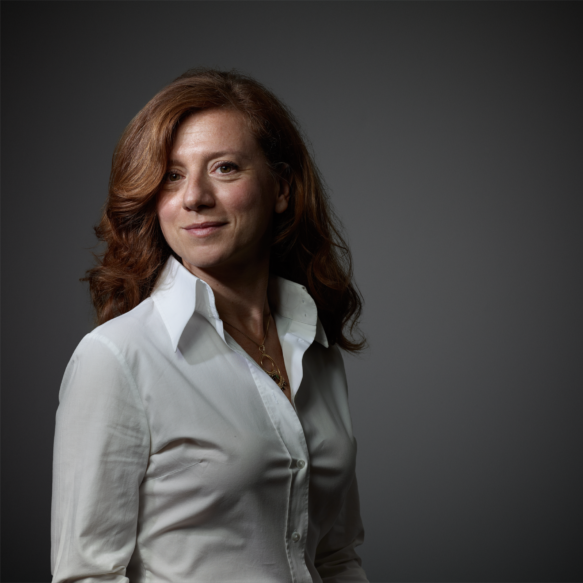
ZHA’s projects often respond to local culture and context. Can you describe a project where understanding the site shaped your design approach?
'We believe contemporary architecture and heritage are not opposites—they are two layers of the same narrative. When we design in historic contexts, we don’t seek to imitate the past but to dialogue with it. We study the cultural DNA of a place—its materials, geometries, and traditions—and translate those qualities into a contemporary architectural language. Respecting history means allowing it to evolve naturally through new interpretations, not freezing it in time.
Our approach to urban transformation is rooted in dialogue rather than disruption. When working in culturally rich contexts, we interpret heritage through a contemporary lens. For example, the King Abdullah Petroleum Studies and Research Centre (KAPSARC) in Riyadh references traditional courtyard typologies of the Middle East while using advanced geometries and sustainable strategies. To honour the past, we allow it to breathe within the present and project into the future.
Designed in response to the environment of the Riyadh Plateau to minimise energy consumption, KAPSARC opened in 2017 and received LEED Platinum certification by the US Green Building Council.
In nature, hexagonal prismatic honeycomb structures use the least amount of material to create a lattice of cells within any given volume. This natural principle determined KAPSARC’s composition as an amalgamation of crystalline forms that emerges from the desert landscape, evolving to best respond to the environment.
Presenting a solid, protecting shell to the harsh sunlight from the south, the campus opens to north and west; encouraging prevailing winds to cool the campus during temperate months via a series of sheltered courtyards that bring softly-controlled daylight into the interior.
Orientated for the sun & wind conditions, the crystalline forms of KAPSARC’s prismatic cells gain in height towards the south, west, and east to shield internal spaces from direct sunlight. ‘Wind-catchers’ integrated within the roof profiles direct prevailing winds from the north into each courtyard for cooling.'
How do you incorporate sustainability, like energy efficiency or eco-friendly materials into your architectural work, and how do you do this in a way that is effectively sustainable?
'Marrying innovative digital design methods with ecologically sound materials and sustainable construction practices, ZHA does not look at the disparate parts, but we work to understand them as a whole – delivering practical solutions to the defining challenges of our era.
Our first approach with our architecture and urbanism is to organise living and working patterns a meaningful way so that everyone can easily contribute to a much more sustainable society.
There are many architects using only sophisticated air conditioning and renewable energy improve the ecological balance of a building. We certainly continue to push forward new technologies for sustainability, but we are also developing new materials and construction techniques to improve the ecological performance of architecture. These different clusters of development – sustainability and the applicability of new methods and materials – are offering solutions to address the environmental impact of architecture.'
With masterplans like Unicorn Island and others, how do you think Zaha Hadid Architects is influencing the development of future urban environments?
'We believe that architecture and urbanism should create environments of engagement. For us, the aesthetic and the functional are inseparable — form arises from use, flow, and human experience. Civic spaces are where design meets society; they are immersive, participatory environments that invite people to connect, move, and belong. Architecture, in this sense, becomes an act of creating shared experience.
The way cities are used today is also very different to that of the past. We must now accommodate the widest variety of people in our cities; people with many different backgrounds, interests and experiences - as well as many different living patterns. Unlike centuries past, our cities must no longer be planned for only one single type of inhabitant. This has really changed the way we plan and organize our cities.
All buildings should have a civic component. Even a private luxury high-rise building should offer a civic program offering public spaces in which people can connect with each other. Developers in both the public and private sectors must invest in these public spaces. They are a vital component of a rich urban life and cityscape – they unite the city, tie the urban fabric together. An arts centre, opera house or a dance school, sports centre or public park, by the very nature of their cultural and civic importance, these spaces are accessible to everybody – which helps eliminate the segregation and divisions in our cities.
ZHA’s design of the Dongdaemun Design Plaza in Seoul, for example, is a social condenser for Seoul's creative industries and design culture—its flowing interiors invite gathering, performance, and movement. It is architecture and urbanism as a medium for engagement and belonging—a stage for urban life to unfold. This architecture and urbanism are clearly popular with the public in communities around the world. Dongdaemun Design Plaza welcomes almost 20 million visitors each year to its programme of cultural events and exhibitions.'
The Heydar Aliyev Centre is often praised for its seamless, flowing form. How do you approach designing spaces that are both sculptural and highly functional?
The fluid geometries of ZHA’s architecture are not simply aesthetic alone—it is philosophical and democratic. Our architecture echoes the dynamism of life itself. Our geometries flow because human experience is not linear; cities are not grids of repetition but fields of interaction. Curvature allows us to express continuity, energy, and connection—an architecture that feels alive and inclusive.
ZHA’s work layers space three dimensionally. Public space within each design is truly omnidirectional. We develop and refine the designs to completely democratize every building—offering generous expanses of public spaces that invite and welcome visitors to explore deep within each project. This architectural methodology is an embodiment of an enlightened philosophical framework, creating open forms and spaces that engage local cultures by an act of attraction rather than imposition.
The MAXXI Museum in Rome and the London Aquatics Centre embody this ethos: flowing geometries that guide movement and perspective, spaces that invite discovery rather than dictate behaviour. Curvature is not aesthetic rebellion—it is an expression of vitality. Life unfolds in gradients and transitions, not rigid partitions; our architecture strives to echo that living continuity.
How do you see Zaha Hadid’s original design ethos being adapted or evolved by the practice today?
Zaha’s methodology and vision remain firmly embedded in the DNA of our studio. ZHA today is not about imitation but evolution—continuing her relentless curiosity and quest for innovation through ZHA’s ever-evolving research and experimentation.
Architecture is deeply intertwined with global forces—social, political, and environmental. Our practice constantly responds to these realities: designing zero-carbon campuses, climate-adaptive waterfronts, and inclusive civic spaces. For example, the Bee’ah Headquarters in Sharjah is designed to minimise the impacts of its harsh desert climate and is powered entirely by renewable energy. In a world defined by uncertainty, our role is to transform global challenges into architectural opportunities for resilience, relevance and beauty.