)
)
)
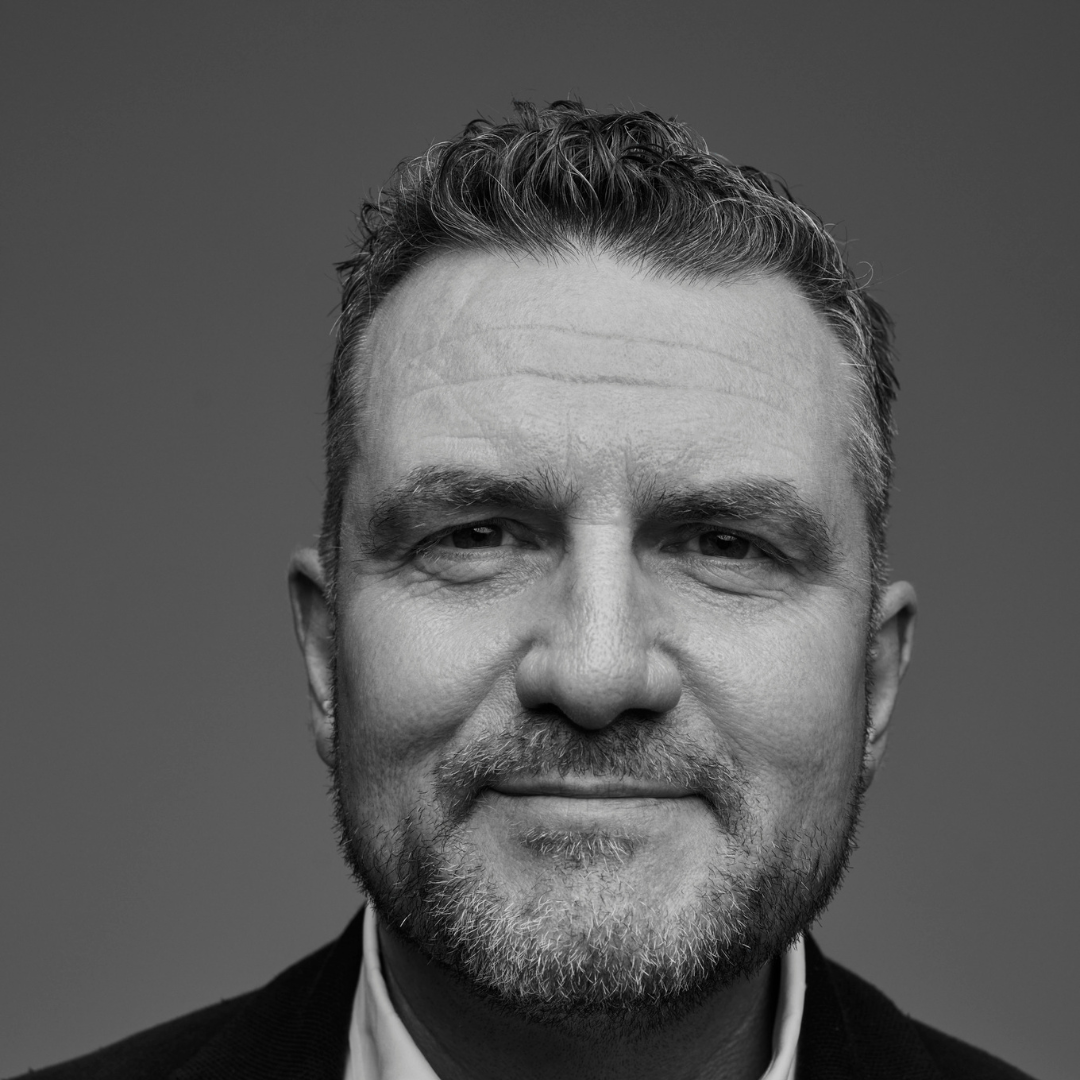
Q&A with Tim Gledstone, Senior Partner, Squire & Partners
Tell us a bit about your success at last year's Surface Design Show in collaboration with Stone Federation
Last year’s collaboration with Stone Federation was about showing stone in a completely different light — not as something heavy or fixed, but as a material with endless versatility and imagination. The installation worked as an interactive multi dimension tapestry, where people could sit, touch, and explore stone across scales — from monumental slabs to intimate objects, even jewellery.
We wanted to highlight how a material quarried for centuries can continue to surprise. Off-cuts, which might once have been discarded, were transformed into petals for our “space flower table,” celebrating reuse as an act of beauty. We also launched ‘Mineral Sound’, exploring stone’s unexpected acoustic qualities.
Perhaps the most rewarding outcome was seeing quarry owners themselves amazed at how their stones – although quarried and worked over generations – could be reimagined in new and diverse ways. For us, it was about breaking preconceptions and showing that stone, like any material, has infinite stories to tell when we allow ourselves to see beyond the surface. Especially when considered on a multitude of scales from Slab to furniture to jewellery.
Your projects always have an inviting feel from the exterior, are there any surface trends or new finish technologies you're on the lookout for?
We love designing buildings from outside to in, down to every last considered detail. We’re interested in surfaces that do more than cover a structure — we want materials that carry memory, evoke emotion, and leave a lasting impression. Increasingly, what excites us are two parallel directions: on one hand, the accessible and sustainable — what we sometimes call the “new fast folk” — surfaces that are humble, local, and affordable, yet designed with beauty and intelligence. On the other hand, there are the exquisite, highly crafted surfaces that take time to create and endure as “building jewels.”
Both are essential. The accessible gives us inclusivity, connection, and a grounded sense of humanity. The exquisite brings refinement, permanence, and moments of delight. When combined, they allow architecture to feel both generous and enduring — something that appeals not just in the moment but across generations.
Your portfolio reflects a humility to site history, what types of upcycled or reclaimed surface materials are you hoping to see at next year's show?
We believe the most sustainable surfaces are those already in existence. Reuse is not just about efficiency — it’s about carrying forward the memory and integrity of materials into new lives. We like to think of these as “antiques of the future”: surfaces that gather value and meaning through reuse and reinvention.
At the show, we’d love to see more high-quality materials ready for reuse! Pre reclaimed stone, timber, and flooring — not positioned as compromises but as celebrated first choices. We’re also intrigued by modular systems that make reassembly easy and intuitive, from joinery that fits together like Lego to panel systems that combine timber, silk, and fabric into flexible, adaptable walls.
Equally exciting are surfaces with purpose — materials that clean the air, generate energy, or foster interaction. Sometimes the simplest things feel most innovative: clay plaster applied with care, natural woven fabrics, or reusable stone tiles designed to last multiple lifetimes. For us, the future lies in designing surfaces that are both functional and poetic — generous to people, and generous to the planet.
You often craft environments that invite tactile engagement, with multisensory surfaces a contributing factor, which of these innovations are currently catching your eye for enhancing the human experience in your work?
Architecture is always a multisensory experience. You don’t just see a building — you touch it, hear it, and feel it. The textures underfoot, the resonance of sound against a wall, the warmth or coolness of a handrail: all of these contribute to how a place makes us feel.
Innovations in multisensory design, particularly those responding to neurodiverse needs, are encouraging us to think more inclusively about the range of human experiences. Yet what consistently resonates is the grounding quality of natural materials. Stone, timber, clay, and fabric have an innate balance that people instinctively connect to, across cultures and generations.
Technology can play an important role in supporting this — helping us refine and expand the sensory qualities of surfaces. But however far innovation pushes us, there’s always a gravitational pull back to nature. For us, the goal is not novelty for its own sake, but the creation of environments that restore balance, spark curiosity, and feel deeply human.
Your practice excels at blending the traditional with the modern, are there any advanced digital surface technologies that you are excited to explore at next year's surface design show?
The technologies we find most inspiring are those that enhance tradition rather than replace it. Digital tools, for instance, are opening up new ways to work with stone and timber — allowing precision and play while still honouring the craftsperson’s hand.
We’re also fascinated by processes that reduce energy and encourage circularity: sun-reflector drying for clay bricks, low-energy ceramics that can later be crushed and re-formed, or stone finishes that extend usability across scales from const2ruction to objects. These innovations point to a future where materials follow full life cycles — always ready to be reborn in another form. But also retro innovations like silk looms for kimonos being reengineered to weave thin steel and copper for metal fabrics .
What ties all of this together is an ethos of total use — celebrating every fragment, every byproduct, every opportunity for renewal. At its best, technology doesn’t accelerate us away from tradition; it helps us return to it, making natural, crafted surfaces more affordable, accessible, and sustainable for the future.