)
)
)
Surface Matter on Circularity, Colour and Giving Materials a Second Life
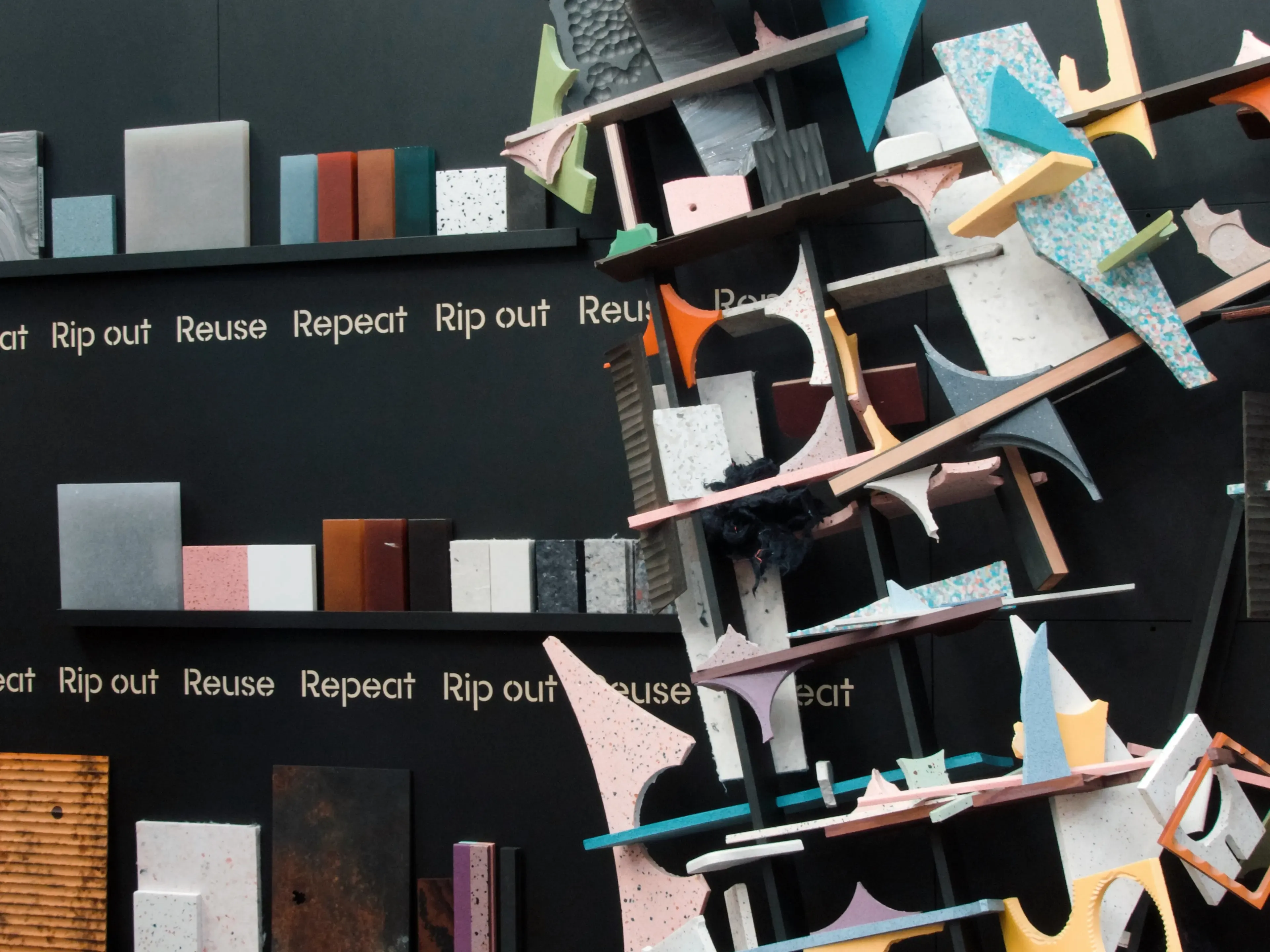
We sat down with the team at Surface Matter at Clerkenwell Design Week to talk about how they source materials, why genuine circularity is still rare, and why they think it's time to bring colour back.
1. You work with beautiful surfaces from all over the world. How do you discover new materials, and what draws you to the ones you choose to prototype or supply?
"We work with a range of different material manufacturers. The one thing that ties them all together is the sustainability story. Manufacturers are working with recycled content, materials that are fully circular, whether by design or by using the characteristics of them, like being high quality so they can be refurbished and used again. That's what ties everything together. And the ones we've chosen to bring into the fold are the ones that do it really well. It's just important to be working with good people."
2. Many companies talk about take-back, but few actually follow through. What do you think needs to change in the industry for genuine circularity to become the norm rather than the exception?
"Everybody needs to communicate with each other. We can't just do it individually by ourselves. Having a system where we partner up with other companies and individuals that want to see a change, that's the only way we can have a driving force to push it. Make it work from the beginning up to the end. Even at the start of a project, thinking about how in ten years this is still going to be useful, and if not, whether it will be reusable or recyclable in the future."
3. What drives your passion for giving materials a second life rather than letting them go to waste?
"When we work with architects and designers, one of the questions that comes up the most is: is this suitable for commercial use? What's the warranty on it? We might be working with a material that's made to last ten, twenty, thirty years. But through no fault of the material, the designer or the end user, things just change. On average, every five to seven years a space gets stripped out, concepts change, brands get updated. So you've got all this material that's made to last the test of time, and it's destined for landfill. We just want to encourage people to do a bit better."
Surface Matter's sister company, Material Rescue, was born from exactly this ethos. "Through Material Rescue, we can now consider taking other high-quality materials and furniture. If something needs a home and it can have a life after that initial project, we're happy to chat about how we might be able to help."
4. Are there any material trends you're excited about right now, or any you think we should move past?
"I think we need to bring colour back. There are a lot of projects now going for greys and the minimalistic, and I think with the materials we work with there's a lot of opportunity for bespoke and customisation. It would be really good to bring those trends back into design and have fun with it again."
That sentiment was visible on the stand at Clerkenwell Design Week, where Surface Matter were working with product designer Alex at Aqua Libra. "Their thing is basically taking something that gets specified without much thought, from a really limited finishes palette, and creating a more design-led solution. Architects can specify a colour for a cover plate, a colour for a tap, just to have a bit more fun with it and bring branding into spaces, not only on this project, that's what we like to do with everything."
5. What kind of material innovations do you hope to see emerging in the next few years, whether in performance, sustainability or aesthetics?
"Moving away from single use. A lot of materials are sold on the fact that they are recyclable, but if there's no route for them to be recycled, most of them just end up in landfill or being crushed or burnt anyway. It's actually only 1% of recycled materials that actually get recycled at end of life. So it's about encouraging people to not just say something can be recycled, but to actually put your money where your mouth is and take it back and do something with it."
On what gives them hope: "It's really good that we partner with people that are innovative and actually want to try new things. With Plasticity, for example, they recycle really difficult plastics. It's very good to see that as much as we don't know what to do with certain materials, there are other people out there that want to make something work. Just an all-round innovative mind."